seatbeltexporter .in / Automotive Restraint Supply
Enquire

Origin — India Category — Automotive Restraint Channel — Export Supply

From Indian Supply to
Global Automotive Markets.

Explore automotive seatbelt and restraint-component supply for international buyers seeking clear product information, professional communication and coordinated export support.

  • India
  • Product
  • Export
  • Destination
Upper seatbelt anchor and height adjuster on a vehicle B-pillar, photographed against evening light through the side window.
Plate 01 — Shoulder anchor & height adjuster Ref HOME/01

The Export Desk

Six questions that shape
every export enquiry.

International restraint-component supply is not a catalogue transaction. Before anything can be quoted, packed or shipped, six things need to be understood clearly. This is the frame every enquiry is read through.

Product

01

What is actually being supplied — a complete seatbelt assembly, a retractor, a buckle receiver, a tongue plate, webbing or a related component? Naming the item precisely removes most of the ambiguity from an international enquiry before it begins.

Application

02

Where is the component intended to be used? A passenger car, a commercial vehicle, a fleet programme and a workshop replacement job each carry different expectations of fitment, configuration and documentation.

Requirement

03

What does the buyer actually need — a specific configuration, a particular anchorage arrangement, a defined quantity, a repeat supply arrangement, or an assessment of whether a requirement can be met at all? Stating this early saves time on both sides.

Documentation

04

What paperwork will the destination and the buyer's own process expect to see? Commercial and shipping documentation requirements differ by market and by importer, and are best raised at the start of a discussion rather than at the end.

Destination

05

Where is the product being supplied to? Destination affects packaging discussion, transport mode, documentation and the expectations placed on a restraint component once it arrives.

Communication

06

How will the requirement be coordinated? Clear, written, responsive communication in English — with photographs and references where useful — is the single most reliable way to keep an international requirement moving.

A fastened black seatbelt tongue and buckle receiver resting on a woven grey vehicle seat.
Plate 02 — Engaged tongue and buckle receiver Ref HOME/02

A desk, not a dashboard.

The Export Desk is how an enquiry is read — not a live tracking screen. Nothing on this page reports real-time shipment status, vessel movements or stock positions.

What it does describe is the information that turns a general question into a requirement that can actually be evaluated. When those six points are clear, a response can be specific rather than generic — and where a requirement cannot be met, that can be said plainly instead of drifting through weeks of correspondence.

Buyer Information

Why international buyers
need product clarity first.

A seatbelt is a safety-critical restraint component. It is not a generic part that fits everything, and treating it as one is the most common reason an international enquiry stalls or arrives wrong.

Restraint components vary by seating position, anchorage arrangement, webbing length, retractor behaviour, tongue and buckle geometry, and the way the assembly mounts into a particular vehicle. Two belts that look near-identical in a photograph can be entirely different parts. That is why a serious supply conversation begins with identification, not with price.

Sharing accurate information at the start is not bureaucracy — it is what allows a supplier to tell you honestly whether a requirement can be met, and what allows you to compare what you are being offered against what you actually need.

Useful to share with an enquiry

  • Application — where the component will be used, and in which seating position.
  • Vehicle information — make, model, variant and year where the requirement relates to a specific vehicle.
  • Product identification — the item as you refer to it, and any reference you are already working from.
  • Component configuration — whether you need a complete assembly or an individual component.
  • Photographs — clear images of the existing part, its mounting points and its orientation.
  • Markings — any text, codes or labels visible on the webbing, tongue, buckle or retractor housing.
  • Dimensions — where relevant, webbing width and length, and the extent of travel required.
  • Quantity — the number of units required, and whether this is a one-time or repeating requirement.
  • Destination — the country the goods are being supplied to.
  • Documentation requirements — anything your own import process expects to receive.

A note on safety. This page does not provide installation instructions and does not suggest that any restraint component is universally suitable. Fitment and suitability should always be confirmed by a competent person against the specific vehicle and application.

The Export Journey

From first enquiry
to supply.

A general export workflow, set out stage by stage, so you can see where a requirement sits at any point and what the next step depends on.

  1. 01

    Enquiry

    A requirement arrives with as much or as little detail as the buyer has. Nothing is assumed at this stage. The first response is usually a short set of questions aimed at closing the gap between "a seatbelt" and a component that can actually be identified.

  2. 02

    Product Identification

    Photographs, markings, measurements, vehicle details and the intended seating position are reviewed together to establish what the component is and how it is configured. Where a requirement cannot be identified confidently from the information available, that is said plainly rather than guessed at.

  3. 03

    Requirement Review

    The identified product is set against the buyer's quantity, timeline and application. This is the point at which a requirement is confirmed as something that can be discussed further, adjusted, or declined — and the point at which unrealistic expectations are better corrected than carried forward.

  4. 04

    Export Coordination

    Once a requirement is agreed in principle, the practical side is worked through: how the goods will be packed and presented, what the destination expects, and how the movement will be arranged. Arrangements are confirmed for the specific consignment rather than promised in advance.

  5. 05

    Documentation

    Commercial and shipping documentation is prepared to match what has actually been agreed and what the destination and the buyer's own import process require. Documentation should describe the consignment accurately — that is its entire purpose.

  6. 06

    Supply

    The consignment is handed to the agreed transport arrangement and the buyer is kept informed through to arrival. Where a supply relationship continues, what was learned on the first consignment carries directly into the next.

Stated plainly

This is a general export workflow, described so buyers know what to expect from the process — not a claim about volumes, routes or past shipments.

  • No shipping partners, freight forwarders or customs brokers are named on this website.
  • No ports, routes, transit times or delivery dates are quoted here.
  • No minimum order quantity is stated as a general rule — quantity is discussed against the specific requirement.
  • No live shipment, container or tracking information is displayed anywhere on this site.

Commercial terms, timelines and arrangements are confirmed in direct correspondence for each requirement, because that is the only place they can be stated accurately.

Global Supply

Built for Buyers
Beyond Borders.

Abstract supply route diagram A decorative diagram showing a single origin node with routes radiating outward to unlabelled destination markers. The nodes are illustrative placeholders and do not represent any particular country, customer or shipment. ORIGIN · INDIA

Illustrative route diagram — destination nodes are decorative placeholders and do not represent countries, customers or shipments.

Supplying across borders is as much a communication discipline as a logistical one. A buyer half a world away cannot walk into a warehouse and look at the part — so everything depends on how clearly it is described, documented and confirmed.

  • International communicationWritten, responsive correspondence in English, with photographs and references used to remove ambiguity rather than add to it.
  • Product informationComponents described by what they are and how they are configured, so a buyer can assess suitability rather than take a description on trust.
  • Export coordinationThe practical arrangements around a consignment worked through and confirmed for that specific requirement.
  • Buyer requirementsQuantity, application, timeline and destination treated as part of the product question, not as separate commercial detail.
  • Destination considerationsAwareness that expectations placed on restraint components differ between markets, vehicles and applications.
  • Documentation awarenessPaperwork raised early, prepared to match what was agreed, and expected to describe the consignment accurately.
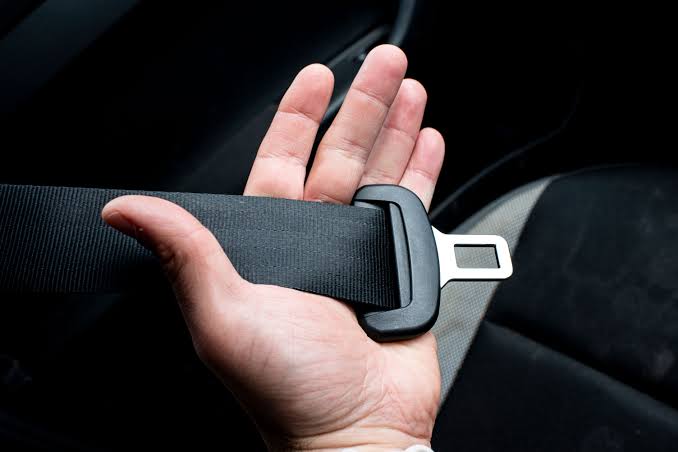
An open hand supporting a black seatbelt tongue plate and webbing inside a vehicle, showing the metal latch plate in detail.
Plate 03 — Tongue plate and webbing Ref HOME/03

Product — 01

Automotive
Seatbelt.

The complete restraint assembly — webbing, tongue plate, buckle receiver and the mounting arrangement that holds it in the vehicle, working as one system rather than as separate parts.

  • ApplicationDiscussed against the vehicle and seating position the component is intended for. Suitability is confirmed for the specific application rather than assumed from the category.
  • RequirementComplete assembly or individual component, configuration, quantity and destination — established from the information shared with the enquiry.
  • Technical dataAvailable on request, against the specific product requirement.

No specifications are published here. Webbing dimensions, load figures, retractor behaviour, material grades and reference numbers are not listed on this website, because publishing figures that have not been verified against a specific product would be worse than publishing none at all.

Quality

Export Starts With
Product Confidence.

Confidence in an exported component comes from knowing what it is, where it is intended to be used and that it has been checked and described accurately. Everything else follows from that.

Product identification

01

Establishing what a component actually is — its type, configuration and intended seating position — before it is discussed as a supply item.

Application awareness

02

Understanding the vehicle and use the component is destined for, because a restraint part is only appropriate in relation to where it is fitted.

Inspection

03

Checking condition and completeness — webbing, stitching, tongue, buckle engagement and mounting hardware — before a component is prepared for supply.

Information accuracy

04

Describing goods as they are. Where something is not known or not verified, saying so is more useful to a buyer than a confident guess.

Documentation

05

Paperwork that matches the consignment it accompanies, prepared against what the destination and the buyer's process actually require.

Responsible supply

06

Treating restraint components as safety-related items throughout, and declining a requirement rather than supplying something unsuitable for its stated application.

On certification. No certification, approval or test result is claimed anywhere on this website. Where a buyer's market or process requires specific documentation or approvals, that requirement should be raised directly so it can be addressed honestly — including where it cannot be met.

Enquiries

Ready to Discuss an
International Requirement?

Share your product requirement, application details and destination information so the requirement can be evaluated clearly.