seatbeltexporter .in / Automotive Restraint Supply
Enquire
  1. Home
  2. Applications

Application Led

The application
decides the
component.

A restraint component is only correct in relation to where it is used. Before any product conversation is worth having, the application has to be on the table — the vehicle, the seating position, and what the component is expected to do there.

Why application comes first

The same category name covers components that behave differently in different vehicles. Naming the application narrows the field before a single specification is discussed — and often reveals that the part being asked for is not the part that is needed.

A driver seated in a passenger car adjusting the shoulder belt across the chest, with the cabin interior visible.
Plate A1 — Passenger vehicle seating position Ref APP/01

01

Passenger Vehicles

Cars, hatchbacks, sedans, SUVs and similar vehicles, where seating positions are well defined and expectations of fit are high.

Passenger vehicles are where seatbelt requirements are most model-specific. Manufacturers design restraint systems around a particular cabin, so anchorage points, webbing travel, retractor packaging and buckle stalk lengths are all set by that vehicle rather than by a general standard for "a car".

This means a passenger-vehicle enquiry lives or dies on vehicle identification. Make, model, variant, body style, year and the exact seating position give a realistic chance of matching a requirement. Without them, even a very clear photograph may not be enough.

Useful to establish

  • Make, model, variant, body style and year.
  • The exact seating position — driver, front passenger, outer rear, centre rear.
  • Whether the vehicle is left- or right-hand drive.
  • Whether the requirement is a complete assembly or a single component.

A driver in a light work shirt drawing a three-point seatbelt across the torso inside a vehicle cab.
Plate A2 — Belt drawn across in a vehicle cab Ref APP/02

02

Commercial Vehicles

Light commercial vehicles, trucks, buses, vans and work vehicles, where cab layouts and seating arrangements vary far more widely.

Commercial vehicle interiors are less standardised than passenger cars. Bench seating, folding seats, suspended driver seats, crew cabs and body-builder modifications all change where a belt mounts and how much webbing travel a position needs. Two vehicles of the same model can differ because their bodies were completed by different builders.

Commercial applications also tend to involve harder use: more cycles, more exposure, more contamination. That makes condition assessment and honest description more important, and makes it more likely that a requirement is genuinely a replacement rather than an upgrade.

Useful to establish

  • Vehicle type, and whether the cab or body has been modified or built up.
  • Seat type at the position — fixed, folding, suspended or bench.
  • Whether the belt mounts to the seat frame or to the vehicle structure.
  • Duty cycle and operating environment, where these affect the requirement.
A driver fastening the seatbelt in a fleet passenger vehicle, seated at the wheel with the belt drawn across.
Plate A3 — Fleet vehicle driving position Ref APP/03

03

Fleet Applications

Operators running vehicles at scale, where the requirement is usually about repeatability rather than a single part.

A fleet requirement is a different kind of question. The operator is rarely solving one vehicle — they are trying to establish what they will need repeatedly, how to describe it consistently to a supplier, and how to avoid a situation where each depot orders something slightly different.

The most useful thing a fleet buyer can do at the start is define the vehicle groups in their fleet and confirm which seating positions are actually in scope. A clear specification agreed once, against a known vehicle group, saves far more than a fast answer to a vague first enquiry.

Useful to establish

  • The vehicle groups in the fleet, and how many of each.
  • Which seating positions are in scope.
  • Expected consumption over a period, and whether supply should phase.
  • Documentation and record-keeping your organisation requires.
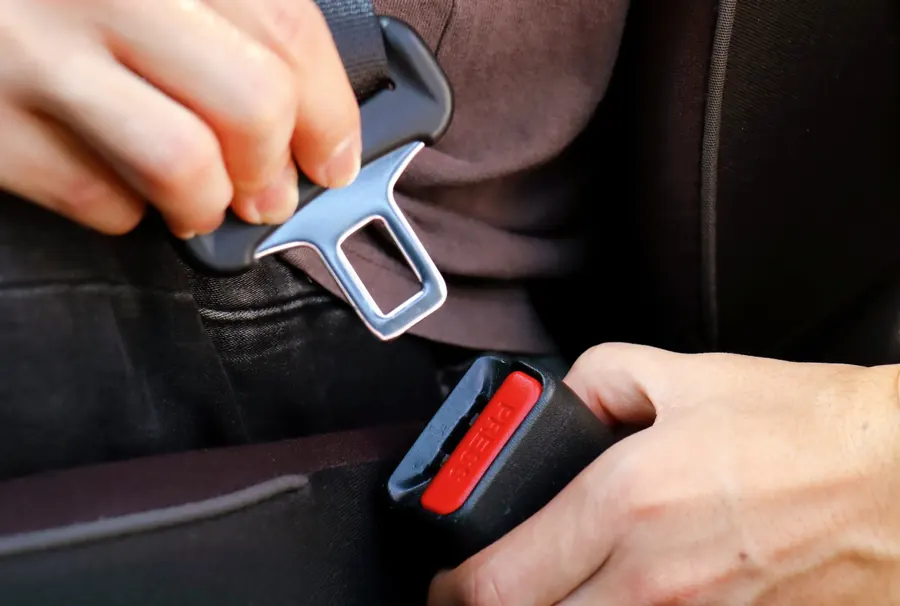
Close view of both hands inserting a seatbelt tongue plate into a buckle receiver with a red release button.
Plate A4 — Tongue plate entering the receiver Ref APP/04

04

Replacement Requirements

Where an existing restraint component is being replaced rather than a new installation being specified.

Replacement is the most common reason a seatbelt enquiry is raised, and it carries a specific advantage: the part being replaced is right there. Photographs of the existing component — in place, removed, from several angles, with any markings legible — are the single most valuable thing a buyer can supply.

It also carries a specific risk. A replacement that fits is not automatically a replacement that is right. Whether a component is appropriate for the vehicle and position, and whether replacement is the correct response at all, must be determined by a competent person assessing the actual vehicle — not by visual similarity to a photograph.

Useful to establish

  • Clear photographs of the existing component, in place and removed.
  • Any markings on webbing, tongue, buckle or retractor housing.
  • What prompted the replacement, and what the component needs to do.
  • Whether the whole assembly or a single component is being replaced.

Important. This page does not provide installation instructions and does not advise on whether a particular restraint component should be replaced. Assessment, selection and fitting of safety-related restraint components should be carried out by a competent person for the specific vehicle.

05

Workshops &
professional buyers.

Automotive workshops, repairers, restorers, body builders, parts distributors and traders are all welcome to enquire. Professional buyers usually arrive with better information — and that changes the shape of the conversation.

Automotive workshops

a

Working on a specific vehicle with the old component in hand. Identification is usually straightforward; the useful conversation is about configuration and what genuinely resolves the job.

Repairers & restorers

b

Often working on older or less common vehicles where the original arrangement matters. Expect a longer identification stage and a frank answer where a requirement cannot be matched.

Parts distributors

c

Buying to hold rather than to fit. The conversation shifts towards groups, quantities, consistency of description and how a repeating requirement is best structured.

Traders & importers

d

Assessing whether a requirement can be sourced and supplied at all. Best served by an early, direct answer on feasibility rather than an extended exchange.

One request applies to every buyer type. Tell us the application. Whatever else is missing from an enquiry can usually be worked through — but without knowing where the component is going to be used, nothing that follows can be said with confidence.

Enquiries

Start with where
it will be used.

Share your product requirement, application details and destination information so the requirement can be evaluated clearly.